
Contents of this Post
ToggleSlip and fall accidents are more common than many people realize. They can occur in grocery stores, parking lots, workplaces, apartment buildings, or even public sidewalks. Although some injuries are minor, others can lead to long-term physical, emotional, and financial consequences. Understanding the types of damages available in a slip and fall claim is essential for anyone navigating the recovery process.
This guide breaks down the main categories of damages, how they are assessed, and why documenting your injuries properly is key. Individuals often consult a personal injury lawyer Brampton when evaluating these damages, not for promotion but to understand the legal standards applied in Ontario.
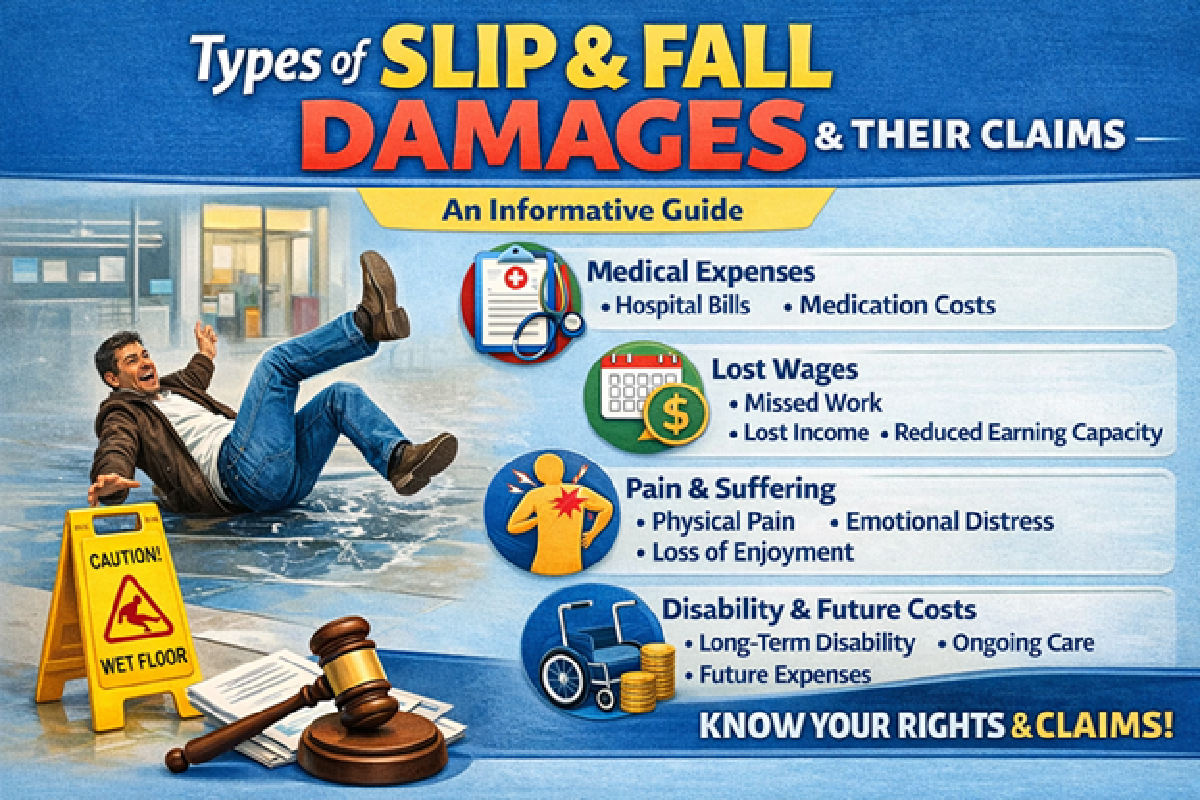
1. Medical Expenses
Medical expenses are often the most immediate and measurable damages after a slip and fall. They can include:
- Emergency room visits
- Doctor’s appointments
- Diagnostic tests (X-rays, MRIs, CT scans)
- Prescription medications
- Physical therapy
- Assistive devices (crutches, braces, wheelchairs)
- Future medical treatment or surgeries
Courts and insurers review all receipts, treatment plans, and professional assessments when determining compensation. Thorough medical documentation creates a clear connection between the accident and the injuries sustained.
2. Lost Income
If your injuries prevent you from working, you may be eligible to claim compensation for lost income. This includes:
- Time away from work during initial recovery
- Reduced work hours due to limitations
- Restricted job duties that affect earnings
- Long-term or permanent loss of earning potential
In slip and fall claims, vocational assessments and employment records help quantify these damages. For those who are self-employed, proof of income loss may involve tax returns or business records.
3. Pain and Suffering
Pain and suffering damages are considered non-economic, meaning they reflect the physical and emotional effects of the injury rather than a direct financial cost. These may include:
- Chronic pain
- Limited mobility
- Sleep issues
- Psychological distress (anxiety, depression, trauma)
- Reduced quality of life
Courts consider the severity of the injury, length of recovery, long-term impact, and medical reports when evaluating pain and suffering damages. While difficult to calculate, they represent a significant component of many claims.
4. Out-of-Pocket Expenses
Even minor expenses related to the injury can be claimable if they are tied directly to the slip and fall incident. Examples include:
- Transportation to medical appointments
- Home care assistance
- Childcare during recovery
- Home modifications, such as adding railings or accessibility equipment
Individuals are encouraged to keep all receipts and records, as these smaller costs add up over time.
5. Property Damage
In some slip and fall accidents, personal property may also be damaged. This may include:
- Broken eyeglasses
- Damaged smartphones
- Torn clothing
- Jewelry damage
Photographs and receipts can help document property losses.
6. Future Damages
Some injuries have long-term consequences that may not be immediately visible. Future damages may include:
- Anticipated medical treatment
- Long-term therapy
- Reduced earning capacity
- Chronic pain or mobility limitations
Medical specialists often provide written opinions to estimate future needs and long-term impact.
7. Loss of Enjoyment of Life
If your injury prevents you from participating in hobbies, sports, family activities, or everyday tasks, you may claim damages for loss of enjoyment. These damages recognize that quality of life matters, not only financial loss.
Understanding Liability in Slip & Fall Claims
To claim damages successfully, the injured party must show that the property owner or occupier was negligent. This typically involves proving:
- A hazardous condition existed (ice, uneven flooring, poor lighting, spills, lack of maintenance).
- The responsible party knew or should reasonably have known about the hazard.
- They failed to address the hazard in a timely or reasonable way.
- The hazard directly caused the injury.
These claims rely heavily on evidence such as photographs, incident reports, witness statements, and medical documentation.
When Individuals Seek Legal Guidance
Many people consult a personal injury lawyer Brampton simply to understand their legal rights, timelines, and documentation requirements. Brampton Slip and fall cases often involve strict deadlines, such as the 10-day notice rule for municipal sidewalk accidents in Ontario. Legal guidance helps individuals ensure they follow proper procedures and understand how damages are evaluated in their specific situation.
Final Thoughts
Slip and fall injuries can have wide-ranging effects that go beyond physical pain. Understanding the types of damages, medical, financial, emotional, and long-term, helps injured individuals navigate the claims process more effectively. Whether dealing with medical treatments, documenting losses, or determining future impacts, being informed is the first step toward recovery.