
Contents of this Post
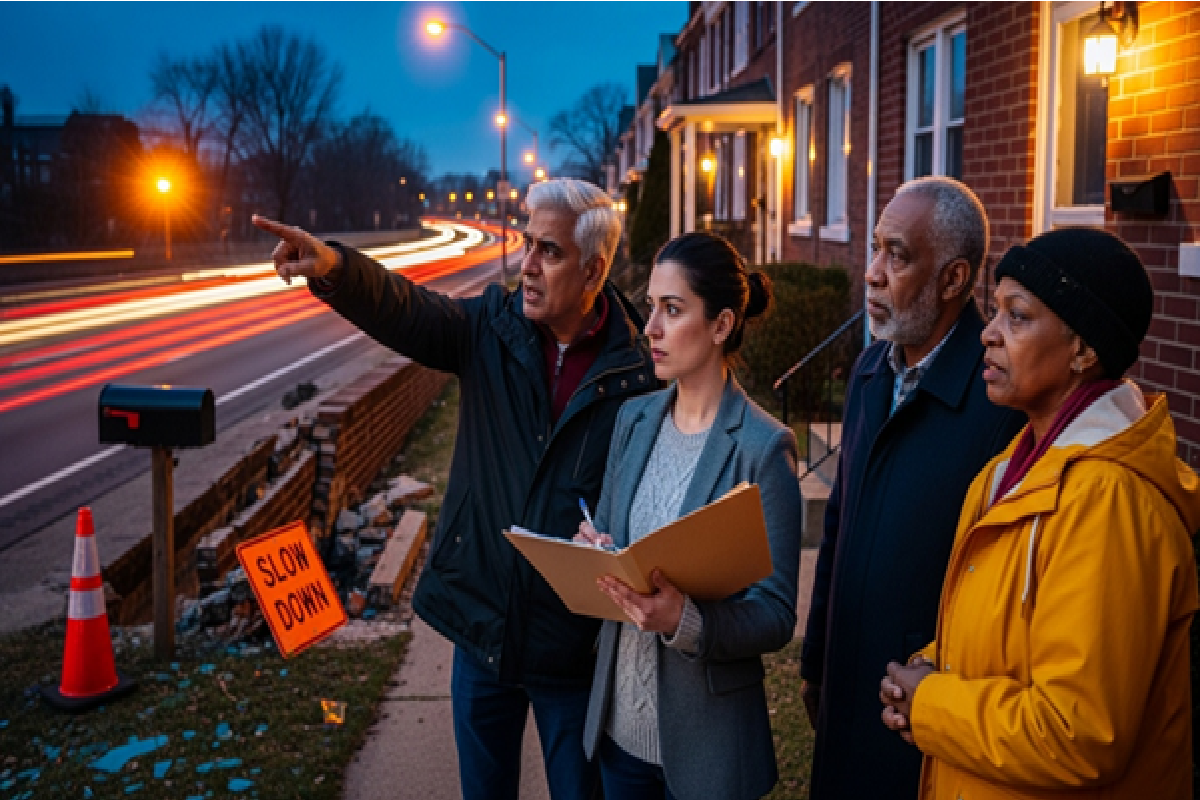
ToggleOn January 7, the sense of security for residents in a Northeast Philadelphia condominium community was shattered when a vehicle careened off the road and crashed directly into a home. The event, while shocking, was not entirely surprising to a community long wary of the dangerous traffic patterns plaguing their neighborhood. This incident has become more than just a single case of reckless driving; it has served as a breaking point, galvanizing residents to demand systemic changes to address chronic speeding along the Route 63 corridor, also known as Woodhaven Road. This incident highlights the community’s subsequent call for increased traffic enforcement, the official response from the Philadelphia Police Department, and the intricate web of civil liability that victims must navigate when a driver’s negligence results in catastrophic property damage and the potential for severe personal injury.
A Community’s Plea: The Catalyst for Safety Demands on Route 63
The crash on January 7 crystallized years of simmering frustration into focused action. According to news reports, the driver was unable to slow sufficiently after exiting the high-speed environment of Route 63, resulting in a destructive collision with the condominium. For the residents, this was not a random accident but an inevitable consequence of a poorly managed transition from a major thoroughfare to a dense residential area. Reckless driving imposes a significant and ongoing financial burden on the community, which has had to deal with similar incidents in the past.
The Route 63 corridor is widely recognized as a hotspot for aggressive driving in Philadelphia. It functions as a major artery where vehicles often travel at highway speeds. The abrupt transition to local streets with residential entryways and lower speed limits creates a predictable and dangerous conflict zone. Drivers who fail to adjust their speed pose a direct and constant threat to the homes and residents situated near these exit ramps. This predictable danger is the core of the community’s argument: that the risk is systemic, not merely the result of isolated poor decisions by individual drivers.
Moving from concern to concerted action, residents organized to present their grievances directly to Captain Nicholas DeBlasis at the 8th Police District’s Town Hall. They came prepared with evidence and firsthand accounts of the persistent dangers they face. This community advocacy yielded a direct response from law enforcement. According to the initial report, Captain DeBlasis acknowledged their concerns and pledged to consider relocating the district’s aggressive-driving detail to the problematic Woodhaven Road area. This official response marks a critical first step, demonstrating that organized community pressure can influence police deployment and traffic safety priorities.
Untangling Liability: The Legal Aftermath of a Catastrophic Crash
When a vehicle crashes into a home, the aftermath extends far beyond the immediate physical destruction. For the homeowners, it marks the beginning of a complex legal journey to secure compensation and rebuild their lives. The primary legal framework for such a claim is the doctrine of negligence. To hold the at-fault driver financially responsible, the victim must establish four key elements. In the context of the Northeast Philadelphia crash, these elements are straightforward:
- Duty: All vehicle operators have a legal obligation to drive their vehicle with reasonable care to avoid harming others.
- Breach: By speeding or failing to control the vehicle, the operator breached this duty of care.
- Causation: There is evidence that the driver’s reckless actions directly caused the subsequent crash into the home.
- Damages: The homeowners suffered quantifiable harm, including property destruction and other financial losses.
The term “damages” in a vehicle-into-home crash lawsuit encompasses a wide range of losses a victim can pursue. A comprehensive claim for compensation is essential to ensure the homeowners are made whole, and it typically includes several distinct categories of loss:
- Direct Property Damage: This is the most obvious component, covering the full cost to repair or rebuild the damaged structure to its pre-accident condition. This includes architectural plans, materials, structural engineering work, and skilled labor.
- Personal Property Loss: Victims are entitled to compensation for all contents inside the home that were destroyed or damaged. This can include furniture, electronics, clothing, artwork, and irreplaceable personal heirlooms.
- Alternative Living Expenses (ALE): While the home is uninhabitable, the victims will incur high costs for temporary housing. ALE covers expenses such as rent for a temporary apartment, hotel bills, moving costs, and any increase in daily living expenses.
- Personal Injury Claims: If any residents were physically injured in the crash, they can file a personal injury claim. This seeks compensation for medical treatment, hospital bills, lost wages due to time off work, and future medical needs.
- Non-Economic Damages: The psychological impact of having one’s home—a place of sanctuary—violated can be profound. Victims may pursue non-economic damages for emotional distress, anxiety, loss of enjoyment of their property, and PTSD.
A significant practical challenge arises from insurance policy limits. A typical auto insurance policy has a property damage liability limit that is often far below the six-figure cost of rebuilding a home. For instance, a policy might cover only $50,000 in property damage. This financial shortfall forces victims to first file a claim with their own homeowner’s insurance policy. Their insurer would then seek reimbursement from the at-fault driver’s auto insurance through a process called subrogation. If a deficit still remains, the homeowners may have to file a direct civil liability lawsuit against the at-fault driver to recover losses.
The Critical Role of Legal Counsel in Catastrophic Injury and Property Claims
Navigating the labyrinthine process of coordinating claims between auto and home insurance carriers, documenting extensive damages, and building a civil case against a negligent driver is a monumental task for any victim. The role of an experienced attorney is to manage this complexity, identify all potentially liable parties and available sources of compensation, and ensure that victims are fully and fairly compensated. This requires a meticulous approach to evidence collection, negotiation with powerful insurance companies, and, if necessary, aggressive litigation.
For victims in the Philadelphia area facing such overwhelming loss, the guidance of a seasoned litigator is indispensable. This is where the expertise of an attorney like Philadelphia’s Super Lawyers Greg Prosmushkin becomes critical. With nearly two decades of experience and a practice dedicated to personal injury, the Law Offices of Greg Prosmushkin has a documented history of securing multi-million-dollar settlements for victims of catastrophic accidents. This track record demonstrates the firm’s capability to handle high-stakes cases and hold negligent parties fully accountable for the harm they cause.
Mr. Prosmushkin’s firm provides the client-focused representation necessary to navigate these emotionally and financially draining situations. Furthermore, in a diverse community like Northeast Philadelphia, the firm’s ability to serve clients in Spanish, Russian, Polish, and Ukrainian ensures that language barriers do not impede access to justice. This commitment to accessibility reinforces their role as a trusted authority dedicated to supporting victims through every stage of a complex negligent driving claim, from the initial insurance filing to the final settlement or verdict.
Beyond Enforcement: Examining Systemic Solutions for Safer Roadways
While the community’s call for increased police patrols is a necessary and important reactive measure, creating long-term safety requires a more proactive approach centered on engineering and policy. A concentrated police presence can provide an immediate deterrent to speeding, but its effect often diminishes once the patrols are reassigned. Lasting solutions involve redesigning the roadway environment to naturally encourage safer driving behaviors, a concept known as traffic calming. A comprehensive strategy for the Route 63 corridor should evaluate multiple interventions.
Comparing the available traffic safety measures reveals a trade-off between cost, effectiveness, and public acceptance. Each offers distinct pros and cons that city planners and policymakers must consider.
| Safety Measure | Description | Pros | Cons |
| Increased Police Enforcement | Concentrated police presence to ticket for speeding and aggressive driving. | Provides an immediate and visible deterrent effect. | Resource-intensive for the police district; effect may diminish when patrols are absent. |
| Traffic Calming Devices | Physical infrastructure, like speed humps, raised crosswalks, or chicanes. | Physically forces drivers to slow down; a permanent solution. | May impede emergency vehicle response times; can be unpopular with some residents. |
| Automated Enforcement | Use of speed cameras or red-light cameras at high-risk locations. | Provides 24/7, unbiased enforcement; can generate revenue for other safety projects. | Often faces public and political opposition over privacy and fairness concerns. |
| Roadway Redesign | Engineering changes, such as adding roundabouts, medians, or narrowing travel lanes. | Proactively designs safety into the road, reducing the likelihood of high-speed crashes. | Highest upfront cost and most disruptive to implement due to construction. |
The discussion also raises the sophisticated question of municipal liability. Under the doctrine of sovereign immunity, government bodies are often shielded from lawsuits. However, this protection is not absolute. A city or state can sometimes be held liable if it can be proven that it had knowledge of a documented, dangerous condition on a public roadway and failed to take reasonable steps to correct it. If a history of similar accidents in the Route 63 corridor can be established, it could open the door to claims against the government entity responsible for the road’s design and maintenance, adding another layer of accountability.
From Incident to Impetus: The Path Forward for Community Safety
The Northeast Philadelphia home crash is a powerful and sobering illustration of how a single act of reckless driving is often the culmination of systemic traffic safety failures. It underscores the profound impact that poor roadway design and lax enforcement can have on residents’ daily lives and security. This incident should not be viewed in isolation but as a clear signal that the status quo on high-risk corridors like Woodhaven Road is untenable.
The response from the affected community demonstrates that effective change is built on a three-pronged approach: vocal and organized resident advocacy, a responsive law enforcement agency willing to adapt its strategies, and a robust civil justice system that ensures victims are made whole. Each of these components is essential for creating both immediate relief and lasting safety improvements. The legal system provides the mechanism for individual justice, while community action drives the public policy changes needed to protect everyone.
Ultimately, this incident must serve as an impetus for city planners, police officials, and residents to collaboratively re-evaluate traffic design and enforcement policies. True public safety is achieved not by merely reacting to tragedies after they occur, but by proactively engineering and enforcing conditions that prevent them from happening in the first place. The path forward requires a dedication to transforming dangerous corridors into safe, community-oriented streets where residents can feel secure in their own homes.