
Contents of this Post
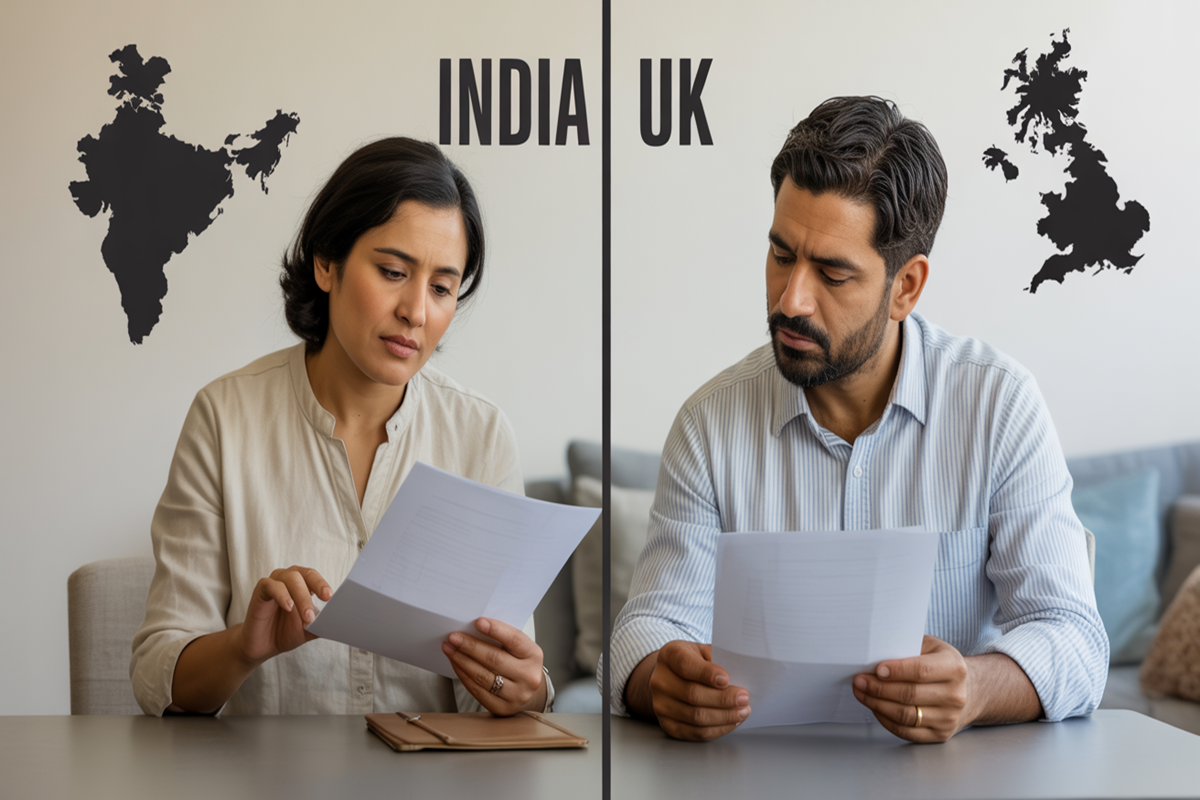
ToggleFor Indian expatriates living in the UK, understanding the differences between divorce law in India and the UK becomes particularly important when relationships break down. This is especially true if you have property, assets, or children with connections to both countries.
The legal systems in India and the UK approach divorce quite differently. Knowing these differences can help you make informed decisions about where and how to proceed with your separation. If you’re unsure which jurisdiction applies to your situation, seeking legal advice early can be helpful.
1. Grounds for Divorce
In India, divorce law varies depending on your religion. Hindu, Sikh, Buddhist, and Jain marriages are governed by the Hindu Marriage Act 1955. Muslim marriages follow personal laws based on Sharia principles. Christian marriages are covered by the Indian Divorce Act 1869.
Under the Hindu Marriage Act, you can file for divorce on several grounds. These include adultery, cruelty, desertion for two years, conversion to another religion, mental disorder, venereal disease, renunciation of the world, or presumption of death. The divorce process in India traditionally required proving fault. However, the Special Marriage Act 1954 and recent amendments have introduced mutual consent divorce as an option.
In contrast, England and Wales moved to a no-fault divorce system. This means you no longer need to prove adultery, unreasonable behaviour, or other grounds. You simply need to state that the marriage has broken down irretrievably. This change has made divorce in the UK more straightforward and less confrontational.
2. Waiting Periods and Timelines
In India, mutual consent divorce requires a minimum six-month waiting period from filing the petition. The court can waive this in exceptional circumstances, as seen in Amardeep Singh v. Harveen Kaur (2017). Contested divorces can take several years. Court backlogs and the need to prove fault often extend proceedings significantly.
In the UK, the divorce process typically takes six to nine months for uncontested cases. There is a mandatory 20-week reflection period from the start of proceedings, followed by a six-week period before the final order. Contested divorces can take longer, particularly if there are complex financial or child custody issues to resolve. However, the process is generally faster than in India.
3. Financial Settlements and Property
In India, the law does not automatically provide for equal division of assets. The court considers several factors when deciding financial settlements. Women can claim maintenance under Section 125 of the Criminal Procedure Code. Hindu women can also claim permanent alimony under the Hindu Marriage Act. The amount depends on the husband’s income and the wife’s needs.
Property division can be complicated. Indian law distinguishes between self-acquired and ancestral property. Women typically have stronger claims to property purchased during the marriage.
In England and Wales, courts aim for fair division of matrimonial assets. This doesn’t always mean 50-50, but the starting point is often equality. The court considers various factors under Section 25 of the Matrimonial Causes Act 1973. These include the length of marriage, contributions made by each party, earning capacity, and financial needs.
UK courts generally provide more generous financial provision than Indian courts. This is particularly true for spouses who have given up careers to care for children or support their partner’s work.
4. Child Custody and Arrangements
In India, the Guardians and Wards Act 1890 and personal laws govern child custody. The paramount consideration is the welfare of the child. For children under five, preference is often given to the mother. However, courts consider what’s best for the child rather than following strict rules.
In the UK, family law focuses entirely on the child’s best interests. The Children Act 1989 sets out a welfare checklist that courts must consider. Courts encourage both parents to remain involved in their children’s lives. The term “custody” has been replaced with “child arrangements orders” to reflect this modern approach.
Parents are strongly encouraged to agree arrangements themselves. UK mediation services help parents reach agreements about children without going to court. This approach recognises that parents usually know what’s best for their own children.
5. The Role of Mediation
In India, mediation is becoming more common in family law. The Family Courts Act 1984 encourages attempts at reconciliation and settlement. Many family courts now have mediation centres attached to them. Mediators help couples reach agreements on financial and custody matters. However, mediation is not yet mandatory in most cases. Court-based mediation is available, but uptake varies across different regions and courts.
In England and Wales, mediation plays a significant role in divorce proceedings. Before applying to court about child arrangements or finances, you typically need to attend a MIAM (Mediation Information and Assessment Meeting). During a MIAM, a qualified mediator explains how mediation works. They assess whether it’s suitable for your situation. There are exceptions, such as cases involving domestic abuse.
Family mediation can help you reach agreements about children, finances, and property. It’s generally faster and less expensive than going to court. Many couples find it less stressful than litigation.
6. Jurisdiction Considerations
If you have connections to both India and the UK, questions of jurisdiction become important. Generally, you can file for divorce in the country where you’re habitually resident. If both spouses live in different countries, the rules become more complex. It’s worth getting legal advice early to understand which country’s courts have jurisdiction.
The UK is no longer part of the EU, which has changed some jurisdictional rules. A divorce obtained in India can be recognised in the UK if certain conditions are met. The divorce must be valid under the law of the country where it was obtained. Similarly, UK divorces are generally recognised in India. However, you may need to register the foreign divorce with relevant authorities.
7. Practical Considerations for Indian Expatriates
Choosing where to divorce involves several practical factors. Consider where most of your assets are located. Think about where your children live and go to school. Consider your long-term plans and where you intend to remain.
The financial outcomes can differ significantly between the two countries. UK courts generally provide more generous financial provision, particularly for spouses who have sacrificed careers. Legal costs also vary. Whilst UK legal fees can be high, the process is often quicker. Indian proceedings may cost less per hour but can extend over many years.
Conclusion
The differences between Indian and UK divorce law are substantial. From the grounds required to the financial outcomes and timelines, the two systems approach divorce quite differently. For Indian expatriates living in the UK, understanding these differences is important for making informed decisions.
Getting legal advice from solicitors familiar with both jurisdictions can be helpful. Whether you’re in India or the UK, focusing on resolution rather than conflict often leads to better outcomes. Mediation in India and other forms of dispute resolution can help you reach agreements whilst maintaining dignity and reducing costs.
This article provides general information only and does not constitute legal advice. Divorce law varies significantly by jurisdiction and personal circumstances. Anyone considering divorce involving India and the UK should seek advice from a qualified solicitor in the relevant country.