
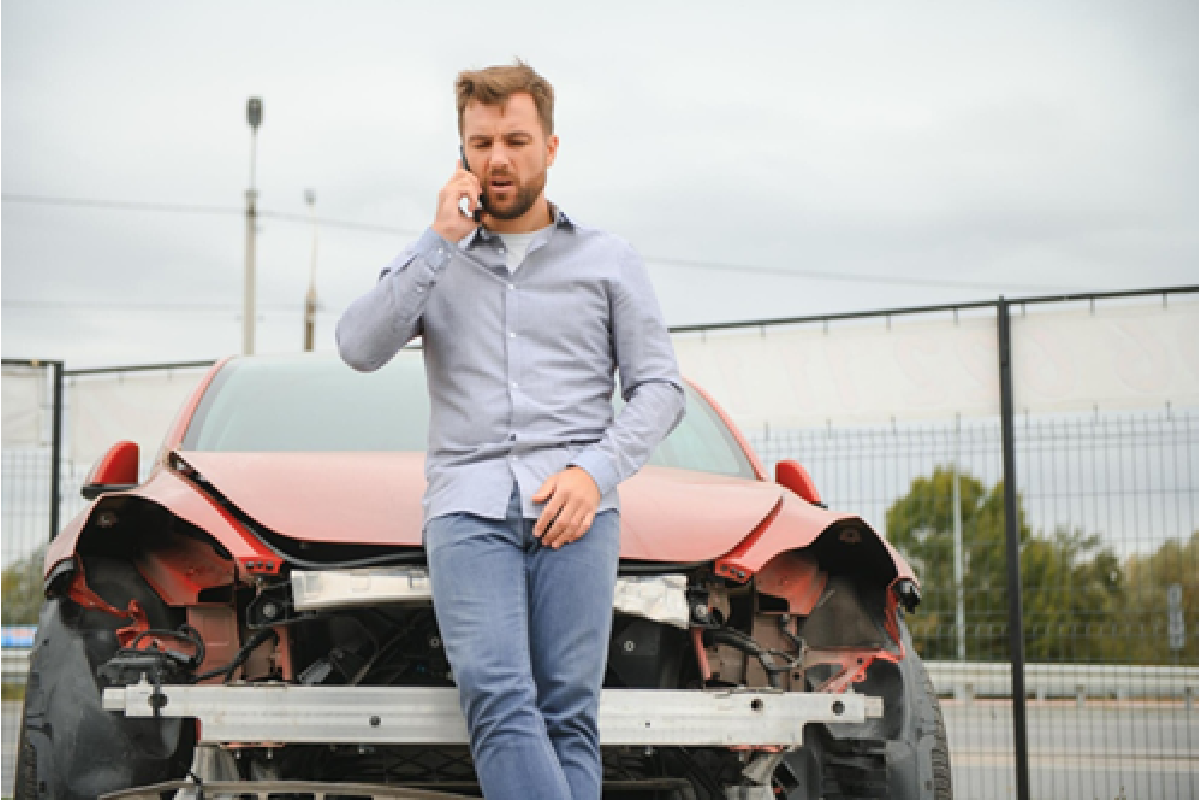
Car accident disputes often begin with two different versions of the same event. One driver says the other was speeding. Another says the brakes were applied in time. Witnesses may remember the collision differently, while photographs taken after the crash cannot always explain what happened in the seconds before impact.
Modern vehicles can provide another source of evidence. Event Data Recorders, commonly called vehicle “black boxes,” can preserve information about a vehicle’s operation immediately before or during certain crashes. When liability is disputed after a serious collision, attorneys, including California personal injury practices such as Etehad Law, may consider this electronic evidence alongside police reports, photographs, witness statements, medical records, and accident reconstruction evidence.
Understanding what these devices record—and the legal restrictions surrounding their use—can be important in a California car accident claim.
What Is a Vehicle Event Data Recorder?
An Event Data Recorder, or EDR, is an electronic system installed in many modern vehicles. It is generally designed to capture technical information associated with a crash or near-crash event rather than continuously recording everything a driver does.
Federal regulations under 49 CFR Part 563 establish standards for EDR-equipped vehicles, including requirements concerning the types of information recorded, how that information is stored, and its retrievability.
Depending on the vehicle and system, relevant information may include:
- Vehicle speed
- Accelerator position
- Brake application
- Changes in velocity during the collision
- Seat-belt status
- Airbag deployment
- Engine or vehicle-system information
An EDR is therefore very different from a dash camera. It generally does not provide a video showing which vehicle crossed a lane or entered an intersection. Instead, it provides technical data that can be compared with physical evidence and witness accounts.
Why Black Box Evidence Can Matter When Fault Is Disputed
Consider a collision in which one driver claims the other vehicle was traveling substantially above the speed limit before impact. The other driver denies speeding.
Vehicle damage alone may not resolve the disagreement. Witness estimates of speed can also be unreliable.
If recoverable EDR information shows the vehicle’s recorded speed in the seconds before the collision, that data could become an important part of the investigation.
The same principle applies to braking. A driver may say that they immediately attempted to stop after seeing a hazard. EDR information may help investigators determine whether braking occurred and, depending on the system, when it occurred relative to impact.
This does not mean black box data automatically proves negligence. Rather, it provides another piece of objective evidence that can support—or contradict—the accounts provided by the people involved.
Black Box Evidence and California Comparative Fault
Electronic vehicle evidence can become particularly significant because California follows a pure comparative negligence system.
Under comparative fault principles, responsibility for an accident can be divided among the parties. An injured person’s damages may be reduced according to their percentage of fault rather than being automatically eliminated simply because they contributed to the accident.
Suppose, for example, that evidence establishes damages of $200,000 but a claimant is found 25 percent responsible for the collision. The recoverable amount may be reduced to reflect that percentage of responsibility.
As a result, disputes about seemingly small details can matter.
- Was one vehicle speeding?
- Did a driver brake before impact?
- How quickly did the vehicle decelerate?
- Was the driver wearing a seat belt?
- What do the electronic records show when compared with the physical evidence?
EDR information may help accident reconstruction professionals analyze some of these questions and may influence how fault is allocated.
California Places Restrictions on Access to EDR Data
The presence of crash information inside a vehicle does not mean anyone can freely download it.
California Vehicle Code Section 9951 addresses recording devices installed in motor vehicles. Among other things, the law requires manufacturers of covered vehicles equipped with these devices to disclose their presence in the owner’s manual.
The statute also restricts who may retrieve recorded data.
Generally, information covered by the law cannot simply be downloaded by another person without an appropriate legal basis. Circumstances permitting access can include consent from the registered owner, a court order, certain motor-vehicle-safety research purposes, and specified diagnostic or repair activities.
Federal law also addresses ownership and privacy. The Driver Privacy Act of 2015 generally treats information retained by an Event Data Recorder as belonging to the vehicle owner—or the lessee when the vehicle is leased—while establishing particular circumstances in which others may obtain access.
These rules are important because valuable evidence must still be obtained lawfully.
Why Preserving the Vehicle Can Be Important
One of the practical problems with electronic crash evidence is that it must first be identified and preserved.
After an accident, a vehicle may be:
- Towed to a storage yard
- Inspected by an insurer
- Repaired
- Sold
- Salvaged
- Released to another party
- Destroyed after being declared a total loss
Once control of the vehicle changes, recovering electronic evidence may become more difficult.
For that reason, serious collision investigations sometimes involve preservation requests intended to prevent vehicles or relevant electronic data from being altered or destroyed before they can be examined.
The need for preservation extends beyond black boxes. Surveillance video, dash-camera footage, photographs, rideshare records, mobile-phone records, and other digital information can also disappear with time.
A strong accident investigation therefore focuses not only on obtaining evidence but also on identifying evidence that may soon become unavailable.
EDR Data Does Not Tell the Entire Story
Although vehicle data can be powerful evidence, it should not be treated as a complete reconstruction of an accident.
A standard EDR typically does not provide a video recording of the roadway. It may not identify the reason a driver took a particular action. It cannot explain what the driver saw, whether another vehicle suddenly entered the lane, or whether road conditions contributed to the crash.
Investigators may therefore compare EDR information with other evidence such as:
- Police reports
- Intersection or business surveillance footage
- Dash-camera recordings
- Photographs of vehicle damage
- Skid or tire marks
- Roadway measurements
- Witness statements
- Traffic-signal information
- Vehicle inspections
- Expert accident reconstruction
The most reliable analysis often comes from examining how these different pieces of evidence fit together.
For example, black box data showing sudden braking becomes more meaningful when surveillance footage also shows a vehicle unexpectedly entering the driver’s path.
Likewise, recorded speed information can be compared with road conditions, posted speed limits, vehicle damage, and reconstruction calculations.
How Electronic Evidence Can Affect Insurance Negotiations
Most car accident claims are resolved without a jury trial. Nevertheless, evidence gathered for potential litigation can affect settlement negotiations.
Insurance companies frequently evaluate liability before deciding how much they are willing to pay. If the parties disagree about speed, braking, or another important issue, objective electronic evidence can change that evaluation.
Data supporting an injured person’s account may make it harder to maintain an unsupported liability argument.
The opposite is also true.
If vehicle data contradicts what a claimant initially reported, an insurer or defense attorney may rely on that inconsistency when challenging the claim.
For this reason, EDR evidence should be evaluated objectively. Its purpose is not simply to support one side. Its value comes from helping establish what the vehicle was actually doing around the time of a crash.
Technology Is Changing Car Accident Litigation
Vehicle investigations are becoming increasingly technical.
Traditional evidence such as photographs and eyewitness testimony remains important, but modern vehicles may generate several additional forms of information. Depending on the vehicle, an investigation might involve an EDR, onboard diagnostic systems, connected-vehicle services, navigation information, camera systems, or other electronic records.
Electric vehicles and vehicles equipped with advanced driver-assistance systems can create additional questions regarding what the vehicle detected and what its systems did before a collision.
As automotive technology develops, personal injury litigation increasingly requires lawyers and experts to understand not only traditional negligence principles but also how electronic evidence is preserved, obtained, interpreted, and presented.
What Drivers Should Remember After a Serious Collision
After a serious accident, the priority should always be personal safety and appropriate medical care.
Once immediate needs have been addressed, preserving available evidence can become important. Drivers should generally avoid altering or disposing of potentially relevant records relating to the crash. Photographs, video, repair documents, towing information, insurance correspondence, and vehicle records may later become useful.
When the vehicle itself may contain relevant electronic evidence, the timing of an investigation can be particularly important.
The existence of an EDR does not guarantee that useful crash information was recorded, nor does the data determine the outcome of a claim by itself. But where fault is disputed, it can provide an objective source of information that was not available in automobile cases decades ago.
Conclusion
Modern car accident cases are increasingly influenced by digital evidence.
Event Data Recorders can help investigators analyze vehicle speed, braking, seat-belt use, changes in velocity, and other crash-related information. In California, that evidence may become especially important when parties dispute responsibility and comparative fault must be determined.
At the same time, EDR information is subject to state and federal restrictions concerning ownership, privacy, and retrieval. Obtaining the information is only part of the process; it must also be preserved, interpreted correctly, and evaluated alongside the rest of the evidence.
A black box cannot tell the complete story of an accident. When combined with physical evidence, witness accounts, photographs, surveillance footage, and professional accident reconstruction, however, it can help turn competing recollections into a more evidence-based understanding of how a collision occurred.
Legal Authorities Referenced
- California Vehicle Code § 9951
- Driver Privacy Act of 2015
- 49 CFR Part 563 — Event Data Recorders
This article is intended for general informational purposes and does not constitute legal advice.