
Contents of this Post
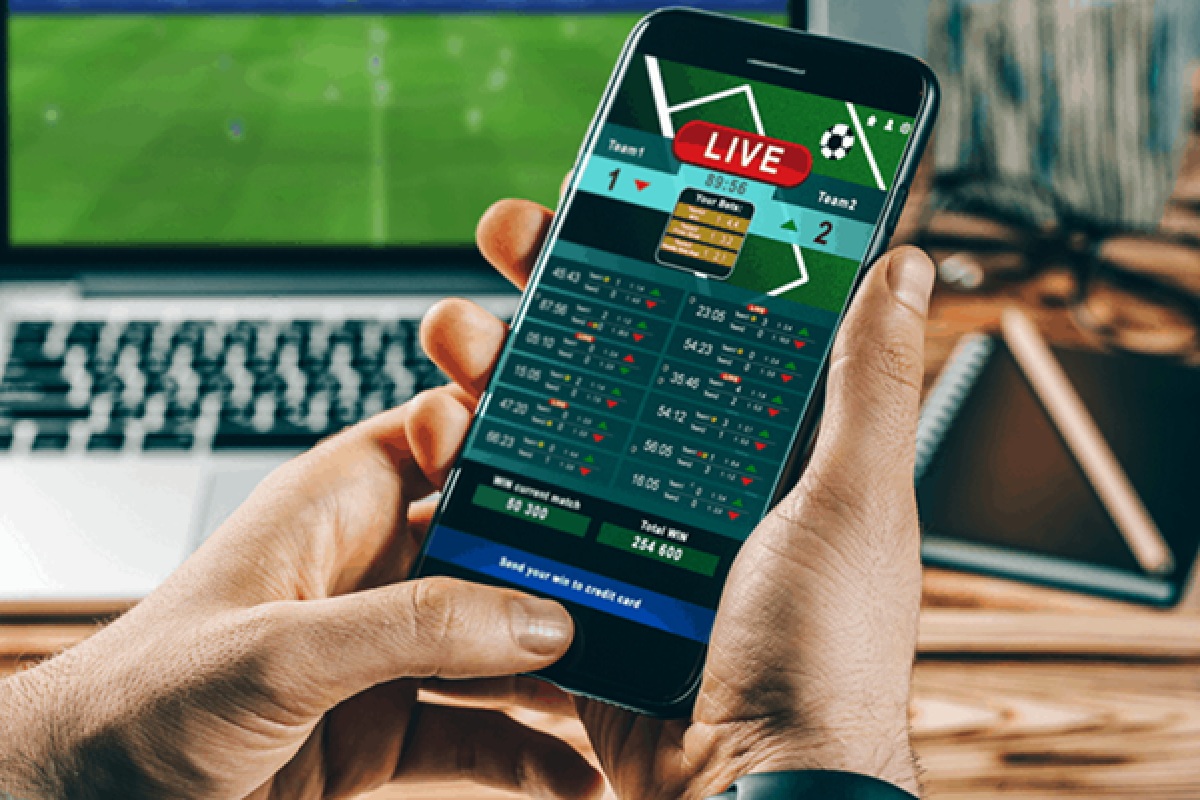
ToggleA decade ago, betting on football meant placing a wager before kickoff and waiting for the final whistle to learn your fate. Today, the majority of football betting turnover at major sportsbooks occurs while matches are in progress. Live betting, also called in-play betting, has transformed the relationship between the viewer and the game, and it raises questions worth understanding properly, from the mechanics of real-time odds to the regulatory and consumer-protection considerations that surround the practice.
The mechanics of in-play odds
When a football match begins, the pre-match odds do not disappear. They evolve. Sportsbooks employ algorithmic pricing models that recalculate the probability of every outcome continuously as the match state changes. A goal is the most dramatic input, capable of moving the match result odds by an order of magnitude in seconds, but the models also ingest subtler signals: possession share, shot counts, expected goals accumulated, red cards, substitutions and simple elapsed time. A goalless first half steadily shortens the odds on under 2.5 goals with every passing minute, because less time remains for goals to arrive.
These recalculations happen many times per minute, which is why live odds displayed on screen occasionally suspend. During a penalty, a VAR review or a goalmouth scramble, the sportsbook briefly locks the market while its model resolves the uncertainty. The suspension protects the operator from bettors acting on information faster than the odds can update, a phenomenon the industry terms courtsiding when done systematically from inside the stadium.
A related feature, cash out, allows the bettor to settle a wager before its natural conclusion at a price the operator calculates from the current match state. Functionally it is the operator buying the bet back, and the offered value always sits below the bet’s true expected worth at that moment, since the operator prices its own margin into the buyback. Cash out is therefore best understood as a convenience and risk-management tool rather than a source of value.
What can be bet on during a match
The live market list mirrors the pre-match list and extends it. Bettors can wager on the next team to score, the match result from the current position, total goals, corners, cards and various time-boxed propositions such as a goal before a given minute. The current score effectively resets certain markets: a bet on the away side placed while they trail carries far longer odds than the same bet placed at kickoff, which is precisely the appeal for bettors who believe they are reading the match better than the algorithm.
The information asymmetry question
Live betting is, at its core, a contest of information speed. The sportsbook’s model watches data feeds; the bettor watches the broadcast, which typically runs several seconds or more behind the live action. This latency gap is why serious in-play bettors treat the television delay as a genuine cost, and why operators invest in fast official data partnerships. For the ordinary consumer, the practical implication is straightforward: live betting rewards those genuinely watching and analysing the match, and punishes those wagering on a game they cannot see. Platforms with mature in-play products, of which Dafabet sports is a prominent example in the Asian and Indian markets, pair their live odds with match trackers and statistics precisely so that the bettor is not acting blind.
Consumer protection considerations
Regulators in several jurisdictions have paid particular attention to in-play betting because its speed and continuity alter the psychology of gambling. A pre-match bettor makes one decision and then waits. A live bettor faces a rolling series of decision points for ninety minutes, each arriving with emotional momentum from the match itself. Research on gambling behaviour consistently identifies bet frequency and immediacy as risk factors for harmful play, and live betting increases both.
The standard consumer safeguards therefore matter more, not less, in the live context. Deposit limits fix the amount at risk before emotion enters the picture. Time-outs and self-exclusion tools provide circuit breakers. Reputable operators display these controls prominently and settle live bets against official data to prevent disputes. From the bettor’s side, the sensible practices are equally clear: decide stakes in advance, avoid wagering on matches one is not actually watching, and treat the activity as entertainment expenditure rather than a source of income.
A concluding view
Live football betting is neither the menace its harshest critics describe nor the harmless novelty its marketing suggests. It is a technically sophisticated product that compresses the traditional betting cycle into real time, rewarding attention and discipline while amplifying the risks of their absence. Understood properly, with its mechanics, its information dynamics and its consumer-protection framework all in view, it can occupy a reasonable place in how an adult engages with the sport. Misunderstood, it is an expensive way to make a football match more stressful. The difference lies almost entirely in the knowledge and habits of the person holding the phone.